Showing posts with label walking. Show all posts

Monday, May 17, 2010

walking Tokyo


There are things we will never see, unless we walk to them.
                          --Thomas A. Clark, 'In Praise of Walking'.


Life in Tokyo tends to move at such fast speed, from non-place to non-place, to the inhuman, ruthless rhythm of trains, allowing no time to perceive neither change nor permanence. Everything is two-dimensional, flat, insignificant, insubstantial.

Yet how different things can look like when you open an existential parenthesis, take time into your own hands and walk the city, from morning to evening, the natural cycle of a day. Your perception of space is utterly changed and you realise how the city is composed of amazingly distinct topographies, of places with interconnected names and histories, with their commonalities and singularities whispering to you from below the glossy surface of commodities.

Dearest Spring Typhoon walking friends, many thanks for your time and company, from Komagome through Nippori, across Ueno to Asakusa on the Sumida River, retracing former horse tracks in the toponymic memory of old Edo. On foot, of course.


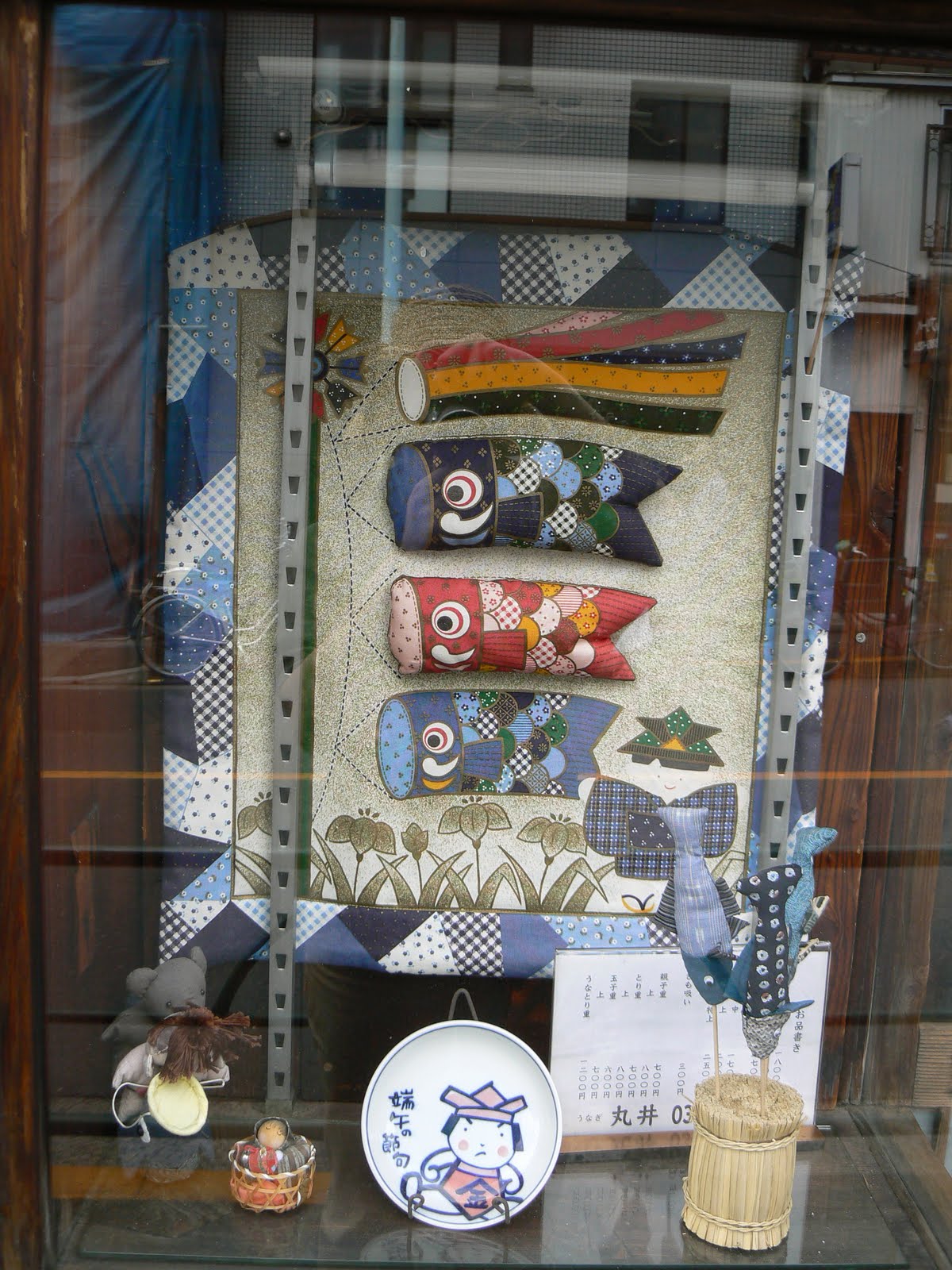


Tokyo, between Komagome and Asakusa on the Sumida River
15 May 2010

Wednesday, March 31, 2010

walking

It's interesting indeed that the activity which quintessentially defines us as social beings has so often been conceived of as a quintessentially solitary, whimsical one. But perhaps it doesn't really make much sense to see both dimensions as opposed to each other. Nobody ever walks alone - or, as Thomas A. Clark put it "in the course of a walk, we usually find out something about our companion, and this is true even when we travel alone" (from "In Praise of Walking"*). Walking with someone is revealing about both our commonalities and our utter separateness. There's is no better way of getting to know someone, for sure.

Walking with a friend tonight, I realised how the act itself so shaped our conversation and simultaneously embodied it in our every pace and move. Our senses of time, what we take as choice and necessity, illusion and reality. Some overlapping lines, some diverging ones.

Our strides bifurcated for good at some point, leaving two forked paths in the labyrinth of the station, hers probably faster and more decisive than mine, or perhaps not. I wandered for a while, wishing to be lost, to prolong the sense of disorientation, savouring it to the full. All the other walkers walking forwards while I walked backwards - all the others standing still, silently suspended in time, while I moved through the white noise.


*in Thomas A. Clark, Distance & Proximity (Edinburgh: Pocketbooks, 2000), p. 17.

Thursday, October 8, 2009

a journey through a wilderness


The best thing is to walk. We should follow the Chinese poet Li Po in 'the hardships of travel and the many branchings of the way'. For life is a journey through a wilderness. This concept, universal to the point of banality, could not have survived unless it were biologically true.

I know this may sound farfetched,' I said to Elizabeth Vrba, 'but if I were asked, "What is the big brain for"?, I would be tempted to say, "For singing our way through the wilderness."'


Bruce Chatwin, Winding Paths: Photographs by Bruce Chatwin (London: Jonathan Cape, 1999), pp. 23-24.


Monday, August 31, 2009

morning walk


Feet on the ground, head in the clouds - but heart under the water, as usual, this morning. Under the water.


Kiyosato, Yamanashi
31 August 2009

Wednesday, December 24, 2008

on friendship (2) et alia...

A friend tells me he is baffled by this kind of non-place in which I seem to live, as if in permanent deambulation. Yet I too am baffled when I catch him quoting Deleuze saying "there is nothing more immobile that a nomad - s/he resists leaving her/his land".

It might be thus indeed. Walking and waiting, waiting and seeking, patience and despair, movement and stillness, silence and song are closer than one might think. Well, at least to me they are part of the same continuum of perception and desire. And being in transit is precisely this: walking, stretching, negotiating the boundaries that at once comfort and constrain you, constantly searching for something that forever eludes you and turns into something else. Arriving at seemingly new, unexpected places that turn out to be familiar ones, even though transfigured beyond hope or reach. Encountering people that nearly always reveal themselves a baffling amalgam of promise and disappointment, shallowness and depth, suspicion and trust, distance and intimacy.

The mystery remains and deepens in the course of time, however, since it is impossible to separate all those things from one another. Everything sticks together like a dough.

People unfold themselves slowly like a long, heavy, intricate tapestry, recoiling at times in fear, but eventually stretching out towards a fuller shape, in a process that requires time and space, patience and waiting, forgiveness. Yet most people, in their hectic, mechanical, self-absorbed routines, seem to have less and less time and space and patience for others. Magnificent tapestries may never unfold, alas. Such a waste.

Anyhow, there is nothing else to do in the meantime but walking and waiting, waiting and searching. Stirring stillness.

"Walking is a mobile form of waiting", indeed, as Thomas A. Clark so brilliantly phrased it.


Saturday, November 22, 2008

walking on the first snow


... always feels like a promising fresh start, like writing the first words in a unused, immaculate notebook. A vida passada a limpo - é isso.


Iizuna, Nagano, 22 November 2008


Tuesday, December 18, 2007

wanderlust


To write is to carve a new path through the terrain of the imagination, or to point out new features on a familiar route. To read is to travel through that terrain with the author as guide. [...] I have often wished that my sentences could be written out as a single line running into the distance so that it would be clear that a sentence is likewise a road and reading is travelling.

Rebecca Solnit, Wanderlust: A History of Walking, p. 72.